

Harvard Worldwide Week Highlights Chilean Collaboration on Social-Emotional Learning through Robotics and Neuroscience

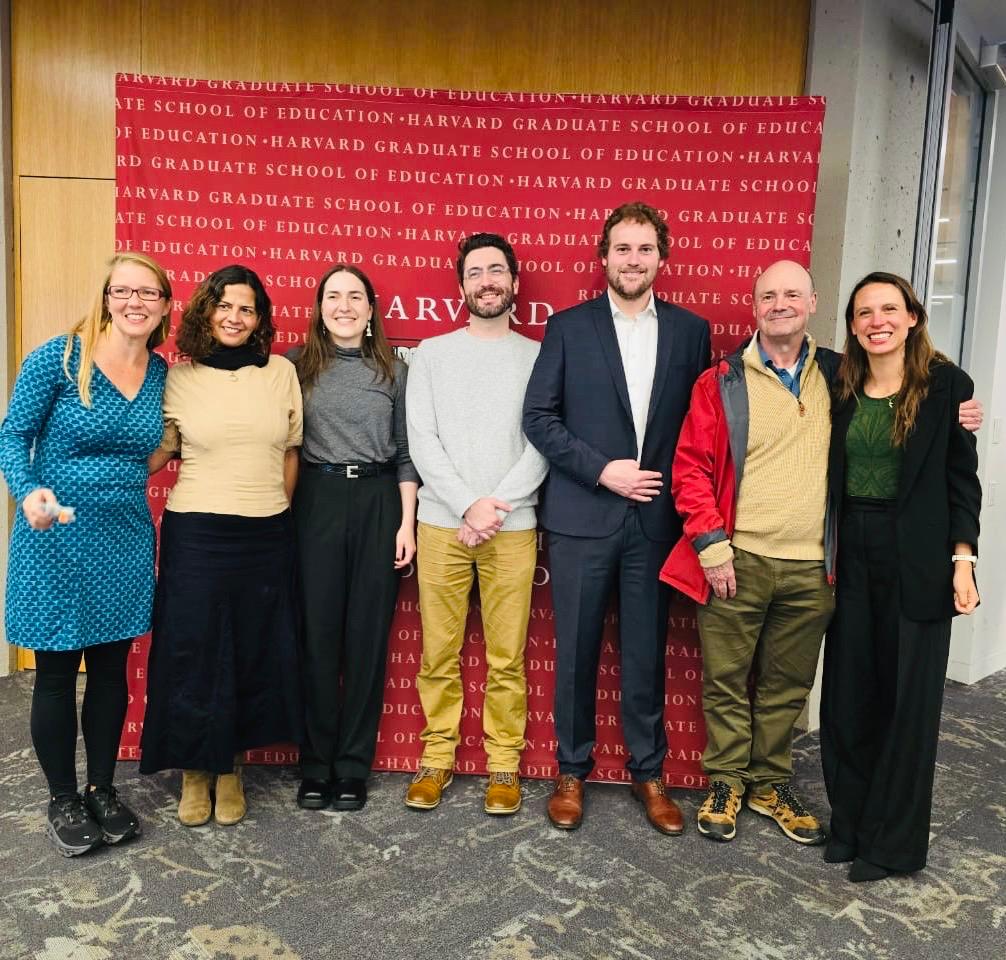
On October 7, 2024, a standing-room-only panel at the Harvard Graduate School of Education (HGSE) captivated attendees during Harvard’s Worldwide Week with the presentation “Research Perspectives to Develop Children’s Social, Emotional, and Academic Skills through Robotics and Brain Games in Chile”. This ambitious project, led by Professor Stephanie Jones, Gerald S. Lesser Professor of Child Development and Education at HGSE, in partnership with the EASEL research team, showcased groundbreaking advancements in neuroscience and education achieved through a unique Chilean collaboration.
Supported by a DRCLAS Collaborative Research Grant and facilitated by the DRCLAS Chile Office, this multidisciplinary initiative has brought together leading institutions, including Fundación Kiri, Mustakis Foundation, Efecto Colectivo, MC Foundation, the Interdisciplinary Center for Neuroscience NeuroUC at the Pontificia Universidad Católica de Chile, Universidad Diego Portales, and Chilean industry partner Sigdo Koppers. Over two years of research culminated in the Worldwide Week presentation, where the team unveiled initial findings and laid out their vision for the future of educational neuroscience in Chile.
Neuroscience Meets Classroom Learning in Innovative Pilot
The project’s core strategy involves a portable neuroscience lab embedded directly within classrooms, where fourth-grade students engage in "Brain Games" and participate in robotics workshops (known as RIEN—Robótica Integral Educativa y Neurociencia) as part of their regular curriculum. These activities, designed to stimulate cognitive and socio-emotional development, leverage neuroscientific assessments to track educational outcomes rooted in empirical research. This intervention is set to expand, with plans to follow students' progress through seventh grade by 2027, ultimately scaling to other Chilean communities.
Cultural Adaptation as Key to Success
One of the project’s defining features is its commitment to adapting socio-emotional learning interventions to fit Chile's diverse social and cultural landscapes. The program operates across both urban Santiago in the Región Metropolitana and rural La Araucanía in southern Chile, ensuring that interventions account for distinct cultural and environmental contexts at social risk. Decentralization is a central approach, with games and activities customized to the specific needs of each community, promoting engagement and enhancing effectiveness.
Building Cognitive Skills and Strengthening Social Bonds
By embedding neuroscience in the natural educational setting, this initiative not only assesses students' cognitive functions but also strengthens mental health and social connections within the classroom. Preliminary results reveal substantial improvements in cognitive skills and the deepening of bonds between students and instructors, offering a promising model for holistic education that fosters mental, social, and emotional growth.
A Visionary Collaboration for a New Educational Paradigm
This initiative stands out for its multidisciplinary coalition of academics, civil society organizations, and private-sector partners—all working toward a shared vision of mental well-being and educational equity in Chile. In addition to Professor Jones, panelists included Dr. Florencia Álamos of Fundación Kiri, Francisco Aboitiz from the Interdisciplinary Center for Neuroscience at Universidad Católica, and Domingo Errázuriz from Mustakis Foundation. Marcela Renteria from DRCLAS moderated the discussion, underscoring the role of international collaboration in advancing innovative educational approaches.
As Chilean students benefit from this cutting-edge research, the project sets a precedent for future educational and psychological interventions globally, positioning Harvard and its Chilean partners at the forefront of education and neuroscience integration.